A research-informed hypothesis, ready for testing
wonderbefore is an audio storytelling product for children ages 3-7, designed to activate imagination through spacious, pause-rich narrative. The design is grounded in developmental neuroscience. The efficacy is not yet empirically validated. We're looking for collaborators.
What we're testing
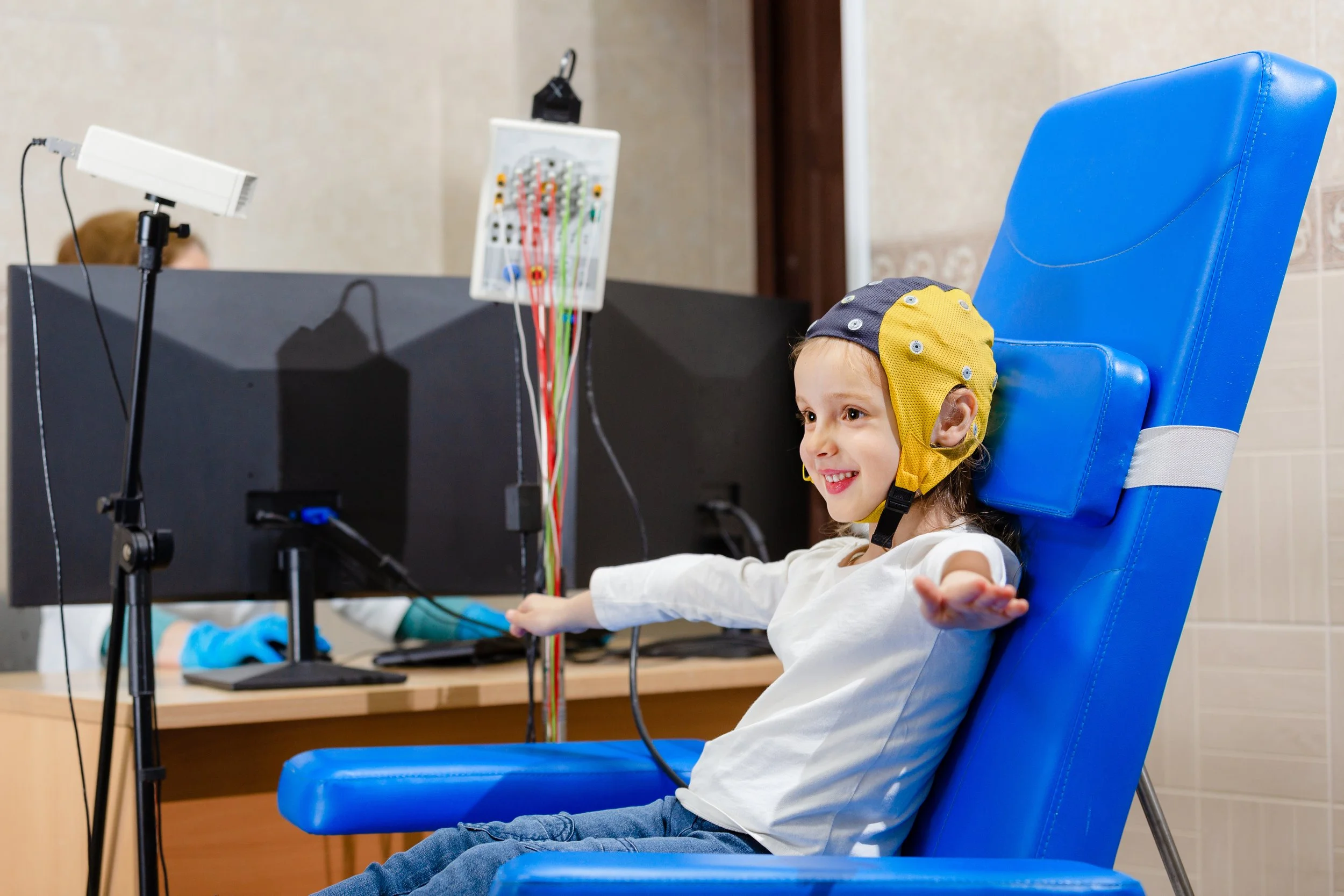


wonderbefore is grounded in a convergent hypothesis derived from research on the Default Mode Network, embodied cognition, and developmental narrative studies.
The core claim: deliberate pauses and slow pacing in audio storytelling facilitate DMN activation in young children, supporting imagination, emotional processing, and creative thinking in ways that continuous stimulation does not.
This hypothesis synthesizes work from Raichle's foundational DMN research, Hutton's neuroimaging studies on story listening in preschoolers, Schooler's mind-wandering and creativity findings, and Brunyé's research on second-person narration and embodied simulation.
We have built a product. We have not yet run a study.

How the product operationalizes research
Every design choice in wonderbefore corresponds to a research-informed principle.

Stories are organized into four thematic categories we call the Four Acts:
Feeling (emotional literacy)
Making (creative agency)
Listening (mindful presence)
Wondering (curiosity and awe).
This framework is a pedagogical synthesis, not an empirically validated construct.
Second-person narration positions the child as protagonist, drawing on perspective-taking research suggesting "you" language activates stronger embodied simulation than third-person narrative.
Extended pauses (2-5 seconds) are embedded throughout each story, creating gaps intended to allow internal imagery generation rather than continuous external input.
Minimal soundscape design uses ambient sound without music, reducing auditory competition and preserving cognitive space for imagination.
Slow pacing and sensory-rich language invite children to construct mental imagery rather than receive it.


What remains untested
Several questions arising from wonderbefore's design have not been directly examined in the developmental literature.
Does spacious, pause-rich audio storytelling produce different imagination or creativity outcomes than standard-paced audio storytelling in children ages 3-7?
Does second-person narration produce stronger embodied simulation in young children compared to third-person narration?
Do deliberate pauses in audio narrative correlate with DMN activation in young children?
Can repeated exposure to spacious audio storytelling measurably affect creativity, emotional regulation, or imaginative capacity over time?
wonderbefore offers a unique opportunity for collaborative research: real-world audio content designed according to operationalized principles, an engaged parent community for recruitment, and a theoretical framework with clearly defined components.
We are open to behavioral studies, neuroimaging collaborations, or longitudinal research partnerships.






Grounded in research
When children aren't being stimulated, their brains activate the Default Mode Network, the same neural pathways responsible for imagination, self-reflection, and creative thinking. wonderbefore is designed to create the conditions for this activation. Every story, every pause, every breath of silence is intentional.
Your child doesn't need more content.
They need more room.
wonderbefore makes that room.
Request the full research synthesis
We have compiled a comprehensive research document synthesizing evidence from developmental psychology, cognitive neuroscience, and educational theory. It includes full citations, acknowledged limitations, and a detailed Research Considerations section.
We welcome honest feedback, critical review, and collaboration.